
The digital marketing landscape is going through a major shift. Generative Engine Optimization (GEO) is the latest evolution in digital strategy, built to help businesses succeed in the age of generative AI.
Generative engines like ChatGPT, Google Gemini, Claude, and Perplexity AI are rewriting the rules of search. They blend traditional retrieval with the power of large language models.
Unlike traditional search engines that provide a list of clickable links, generative engines deliver custom, multi-format responses tailored to each query. This creates a 'zero-click' environment where AI generates the complete answer on the results page. If your content is not optimized for how these platforms process data, your business will get overlooked.
Pure Marketing Group is more than a digital marketing agency. We serve as your entire Growth Operating System. This evolution in search requires a shift toward content that is not just indexed but actively understood and cited by AI.
Quick Overview:
GEO is the new frontier of digital marketing. With ChatGPT, Gemini, and Claude dominating search, businesses must optimize content for retrieval and summary in a zero-click world.
Understanding the differences between SEO, GEO, and AEO is key. Each requires different approaches to data structure, multimodal authority, and becoming the answer AI generates.
What is Generative Engine Optimization?
GEO is the practice of structuring digital content and managing your online presence so AI-powered search engines select and cite your business as a trusted source. It directly influences how large language models retrieve, summarize, and present information.
You may also hear it called Answer Engine Optimization (AEO), Large Language Model Optimization (LLMO), or Artificial Intelligence Optimization (AIO). The names differ, but the goal is the same: make your brand the definitive AI-generated answer.
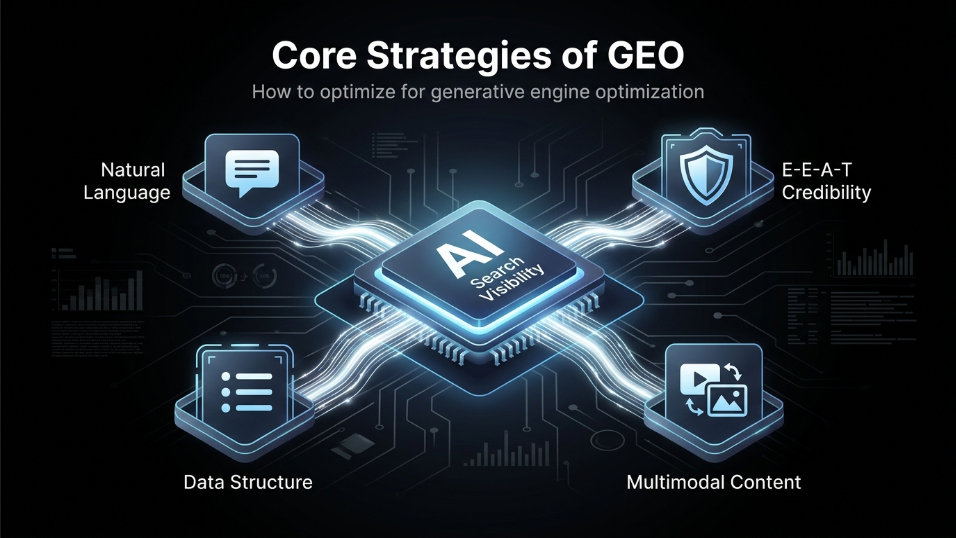
The Convergence of Search: SEO vs. GEO vs. AEO
The industry often uses these terms interchangeably. But understanding the technical differences is critical for a strong strategy.
The Similarities
SEO, GEO, and AEO share the same fundamental goal: connecting your brand with users searching for solutions. All three require strong technical health. Whether a Google crawler or an OpenAI bot scans your site, both need fast load times, mobile responsiveness, and solid E-E-A-T signals. As Nick Fox, VP of Google Product, stated: 'Optimizing for AI search shares deep foundational similarities with traditional SEO.'
Search Engine Optimization (SEO)
Traditional SEO focuses on achieving higher rankings on search engine results pages. Success relies on optimizing pages with specific keywords and building backlinks. SEO campaigns target search volume and domain authority to capture clicks from users browsing multiple websites.
Generative Engine Optimization (GEO)
GEO shifts focus to how large language models retrieve, summarize, and present information. Instead of competing for a click, GEO ensures your content is the answer these engines choose to generate.
Unlike SEO, which rewards keyword density, GEO prioritizes context, clarity, conversational tone, and multimodal content. Your strategy must include text, images, and video to appeal to generative algorithms.
Answer Engine Optimization (AEO)
AEO is often used as a synonym for GEO today, but it predates large language models. AEO specifically targets systems that return direct, zero-click answers, such as voice assistants and Google Featured Snippets. As a top SEO & AEO (Answer Engine Optimization) agency, Pure Marketing Group uses AEO to structure your data into strict Q&A formats so parsing algorithms can extract single, definitive facts.
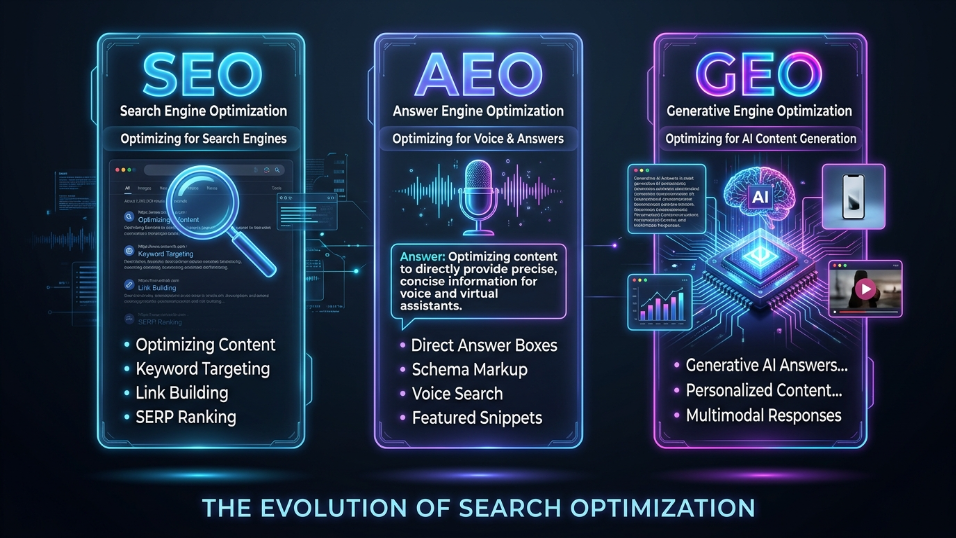
Core Strategies for Generative Engine Optimization
Generative engines rely on clear, relevant, structured information. To dominate this landscape, implement these strategies:
1. Speak the Natural Language of AI
Generative engines rely on natural language processing. Your content needs a conversational, human tone. Instead of short keywords like 'best running shoes,' target long-tail questions like 'What are the best running shoes for beginners?' Answering related questions within your content gives AI complete context.
2. Structure Content for Easy Parsing
AI models parse data, not read pages. Structure your content with:
- Question-based subheadings
- Bullet points
- Comparison tables
Organized, modular content makes it easy for AI to understand, extract, and index your facts.
3. Build Credibility Through E-E-A-T
AI prioritizes sources with verifiable facts, data, and clear authorship. Create authoritative content that directly answers queries. Display author credentials, professional backgrounds, and case studies to prove Experience, Expertise, Authoritativeness, and Trustworthiness.
4. Implement Technical Schema Markup
Even with intelligent generative engines, technical optimization matters. Structured data and JSON-LD schema markup help AI understand your exact context. Also optimize site speed and add accessibility features like image alt text for faster processing by both users and AI crawlers.
5. Think Beyond Text with Multimodal Content
Generative engines mix text, images, and videos into single responses. If your digital footprint lacks visual variety, it may not make the cut. Include custom graphics, infographics, podcasts, and short-form video to answer complex questions and appeal to multimodal algorithms.

Tracking Your GEO Success
Measuring GEO success requires different tools than keyword tracking. Use platforms like Ahrefs, Peec AI, Profound, and Semrush to monitor AI citations. Focus on three key metrics:
- Mention Frequency: How often your brand appears in AI answers.
- Citation Rate: Which URLs does AI link to as reference material?
- Share of Voice: How your visibility compares to competitors for specific queries.
How Pure Marketing Group Drives AI Search Visibility With GEO
We deliver results, not just strategy. Generative engines evaluate your entire digital footprint to verify authority. We engineer visibility through a full-funnel approach.
We deploy optimized press releases that directly impact AI results. Trusted backlinks and proof on major publications force AI models to recognize your authority. We amplify these signals through Experiential Giveaways and Influencer Marketing Systems. This combination of technical structure, real-world activation, and social validation makes your brand the recommended answer.
Whether you are optimizing local visibility or using our LaunchBoost: GTM services to scale into the U.S. market, we build systems that turn AI attention into predictable revenue.
Frequently Asked Questions (FAQs)
What does Generative Engine Optimization (GEO) mean?
Generative Engine Optimization (GEO) is the practice of structuring digital content and managing online presence to improve visibility in responses generated by artificial intelligence systems like ChatGPT, Gemini, and Claude. The goal is to ensure the AI selects and cites your content as the primary trusted source.
How is GEO different from traditional SEO?
Traditional SEO focuses on optimizing content with keywords and backlinks to rank highly in the standard search results. GEO focuses on conversational language, highly structured data, and verifiable authority to ensure a brand is actively mentioned and summarized in AI-generated conversational answers.
Do I still need technical SEO for generative engines?
Yes. Implementing technical SEO is a huge component of GEO success. You must use structured data and schema markup to help AI algorithms instantly translate the context of your page. Fast site speed and strict accessibility standards are also required for AI bots to process your data efficiently.
How do press releases improve my GEO strategy?
Press releases help your brand surface in AI search results by establishing digital proof and topical authority. Because generative models are trained on reputable third-party data, having your brand consistently mentioned and linked across high authority news platforms trains the AI to view you as an industry leader.